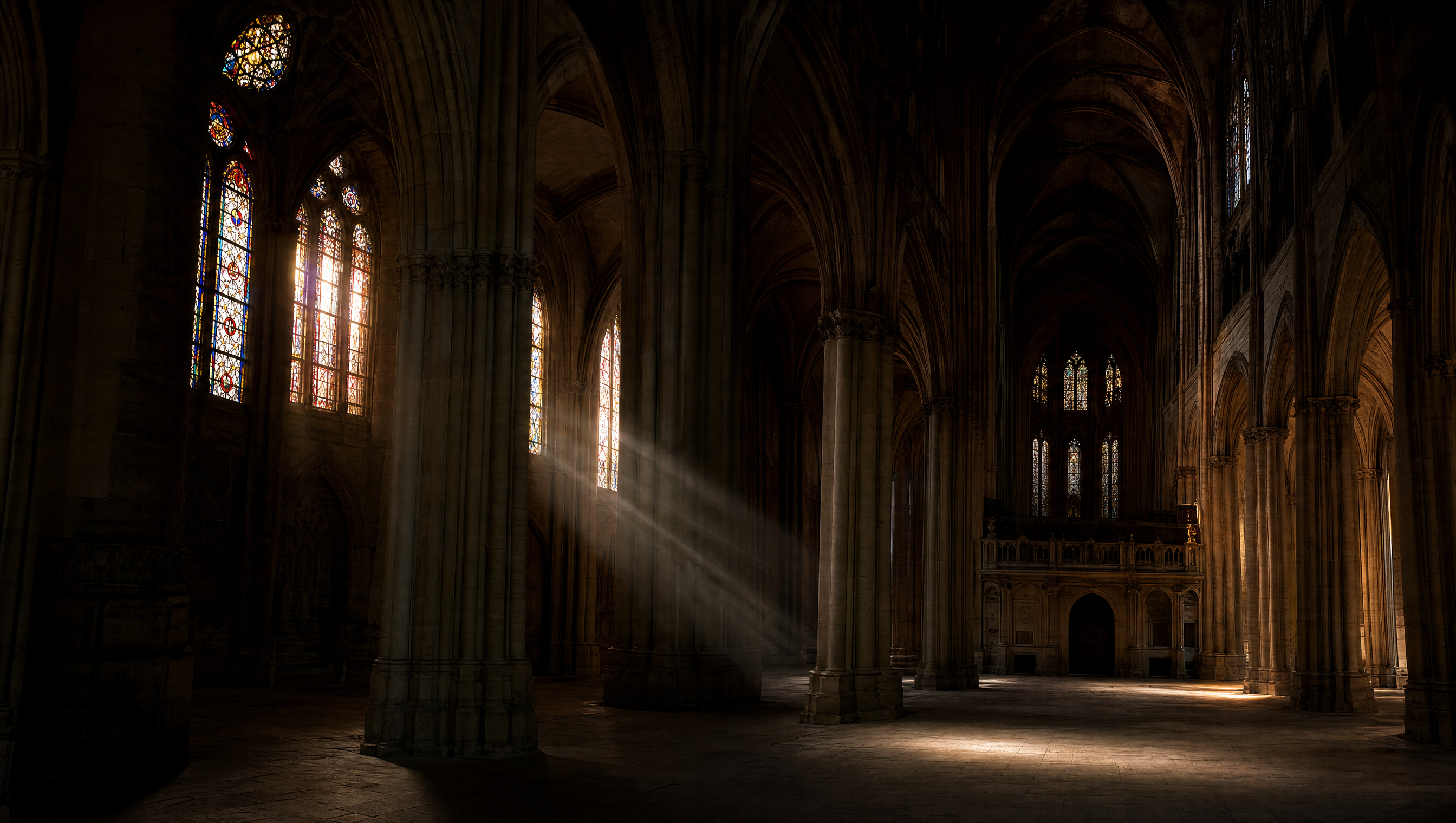
Stand in the center of a large cathedral and clap once. What you hear next is not a single echo. It is a cascade of reflections that builds, swells, and decays over the course of six, eight, sometimes twelve seconds. The sound fills the space and then slowly drains away, each reflection carrying information about the stone, the glass, the wood, and the geometry that shaped it.
This is not reverb in the sense that a mixing engineer uses the word. A cathedral reverb is not an effect applied to a sound. It is a physical process by which the space itself participates in the performance. The room is not processing the sound. The room is playing it.
Why Cathedrals Sound the Way They Do
Cathedral acoustics are a product of three factors: volume, surface materials, and geometric complexity. The volume of a large cathedral can exceed 100,000 cubic meters. Sound travels at 343 meters per second, so in a space that large, the first reflection might arrive 100 milliseconds after the direct sound. This creates a sense of vastness that no plugin can replicate, because the geometry is real.
The surfaces in a cathedral are overwhelmingly hard and reflective: stone, marble, glass, and wood. These materials absorb very little acoustic energy, which means the sound bounces back and forth many times before it decays to inaudibility. The long decay time is a direct consequence of the low absorption.
The geometric complexity is what makes cathedral reverb sound different from, say, the reverb in a gymnasium of similar volume. Cathedrals have columns, arches, domes, side chapels, and irregular surfaces that scatter sound in all directions. This scattering creates a diffuse reverberant field, where the sound is evenly distributed throughout the space. A gymnasium, by contrast, has flat parallel walls that create flutter echoes and standing waves.
The Problem of Capturing Cathedral IRs
Recording an impulse response in a cathedral presents unique challenges. The most obvious is noise. Cathedrals are not quiet environments. They have heating systems, ventilation, traffic noise from outside, and tourists. The reverb tail we want to capture is very quiet, which means background noise is a serious problem.
The solution is the sine sweep technique. A 30-second sweep played through a powerful speaker produces a recording with a high signal-to-noise ratio. After deconvolution, the noise floor is pushed down by the ratio of sweep duration to reverb decay time. A 30-second sweep in a 7-second reverb space gives roughly 12 dB of noise reduction, which is usually enough.
Another challenge is the sheer volume of the space. The speaker needs to produce enough energy to excite the entire room. A small portable speaker will not do. We use a high-output dodecahedron speaker that can produce 110 dB SPL at 1 meter, which is loud enough to excite even the largest cathedrals.
Position Dependence
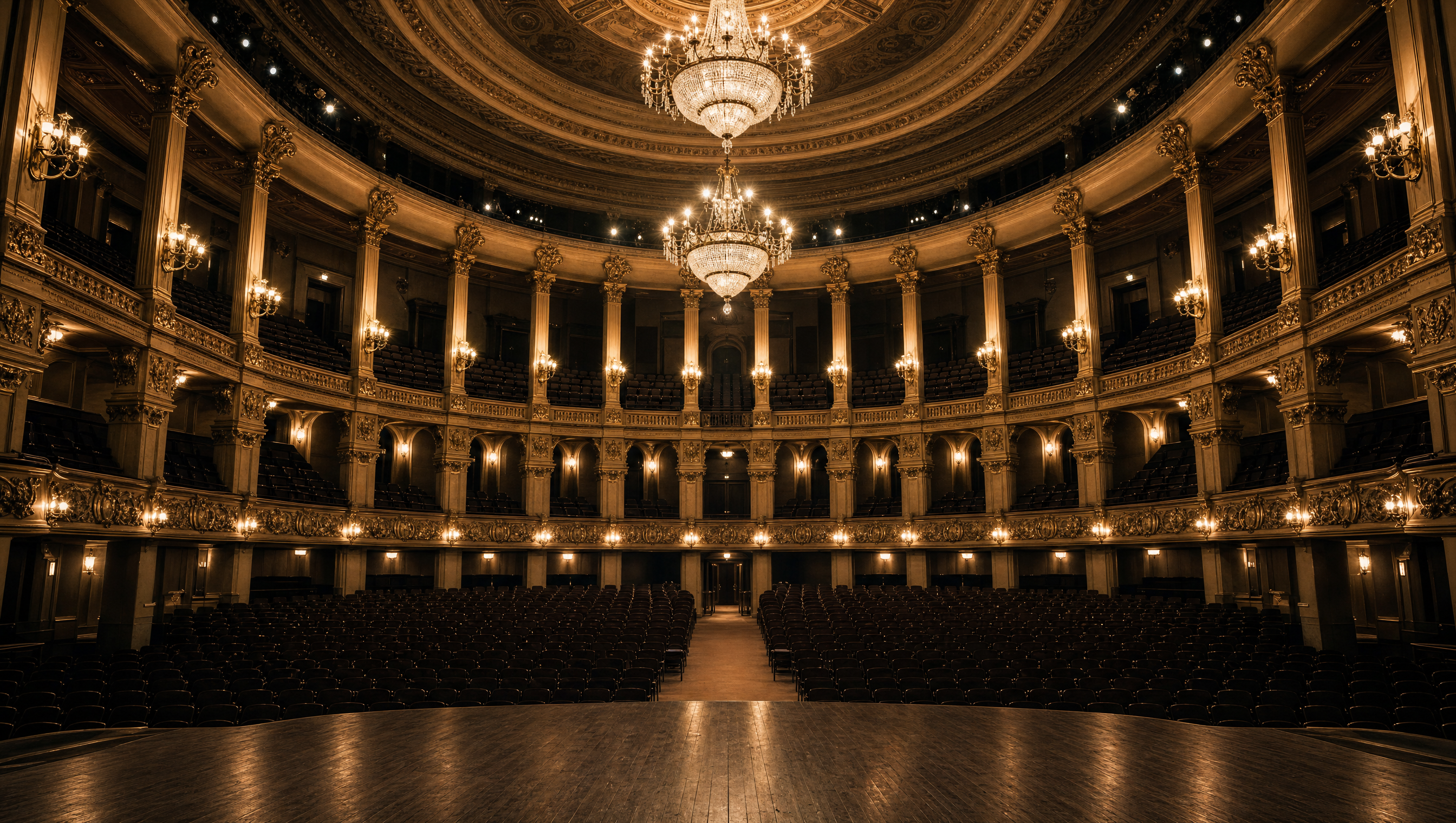
A cathedral does not have one reverb. It has many. The impulse response changes dramatically depending on where the source and listener are positioned. Stand near the altar and the reverb sounds different from standing in the nave. Stand in a side chapel and the reverb is shorter and more intimate. Stand near a column and you hear distinct early reflections from the stone surface.
This means a single IR cannot represent a cathedral. We capture multiple positions: the altar, the center of the nave, the choir loft, and various side positions. Each one sounds different, and each is useful for different production contexts.
The altar position tends to have the longest reverb because it is typically the most distant point from any absorbing surface. The nave center has a more balanced sound with earlier reflections from the side columns. The choir loft, being elevated, captures the sound of the space from above, which produces a different perspective on the same room.
Using Cathedral IRs in Production
Cathedral IRs are powerful but dangerous. A seven-second reverb on a lead vocal will bury the vocal in the mix. Used carefully, however, they can transform a recording.
The most common use is on orchestral and choral recordings. A cathedral IR applied to a string section makes the players sound like they are performing in an actual cathedral. The key is to use it sparingly: a low wet/dry mix (10 to 20 percent) adds space without overwhelming the dry signal.
Another technique is to use cathedral IRs as send effects rather than inserts. Route a copy of the signal to a bus with the cathedral convolution reverb, and blend the wet signal in subtly. This lets you control the reverb level independently and makes it easier to EQ the reverb return.
A cathedral IR on a solo piano can be transcendent. The same IR on a kick drum can be a disaster. Choose your source material carefully.
The Architecture of Sound
Cathedral builders were, knowingly or not, acoustic engineers. The Gothic arch, the ribbed vault, and the flying buttress were structural innovations that also had acoustic consequences. The high ceilings created long reverb times. The hard stone surfaces ensured that sound would carry. The irregular surfaces of the carved stonework produced diffusion.
Some scholars believe that the acoustic properties of cathedrals were intentionally designed to enhance liturgical music. Gregorian chant, with its slow tempos and long sustained notes, is perfectly suited to a long reverb time. The notes blur together into a continuous wash of sound, creating an ethereal quality that is impossible to achieve in a dry acoustic.
Whether or not the acoustic design was intentional, the result is undeniable. Cathedrals are among the most acoustically distinctive spaces ever built. Capturing their sound in impulse responses is a way of preserving that acoustic heritage, making it accessible to anyone with a DAW and a convolution reverb plugin.
These buildings will not last forever. Stone erodes, glass breaks, and renovation can alter a space's acoustic character irreversibly. An IR captured today is a record of the space as it exists now. Future generations may hear it differently, but they will hear it.