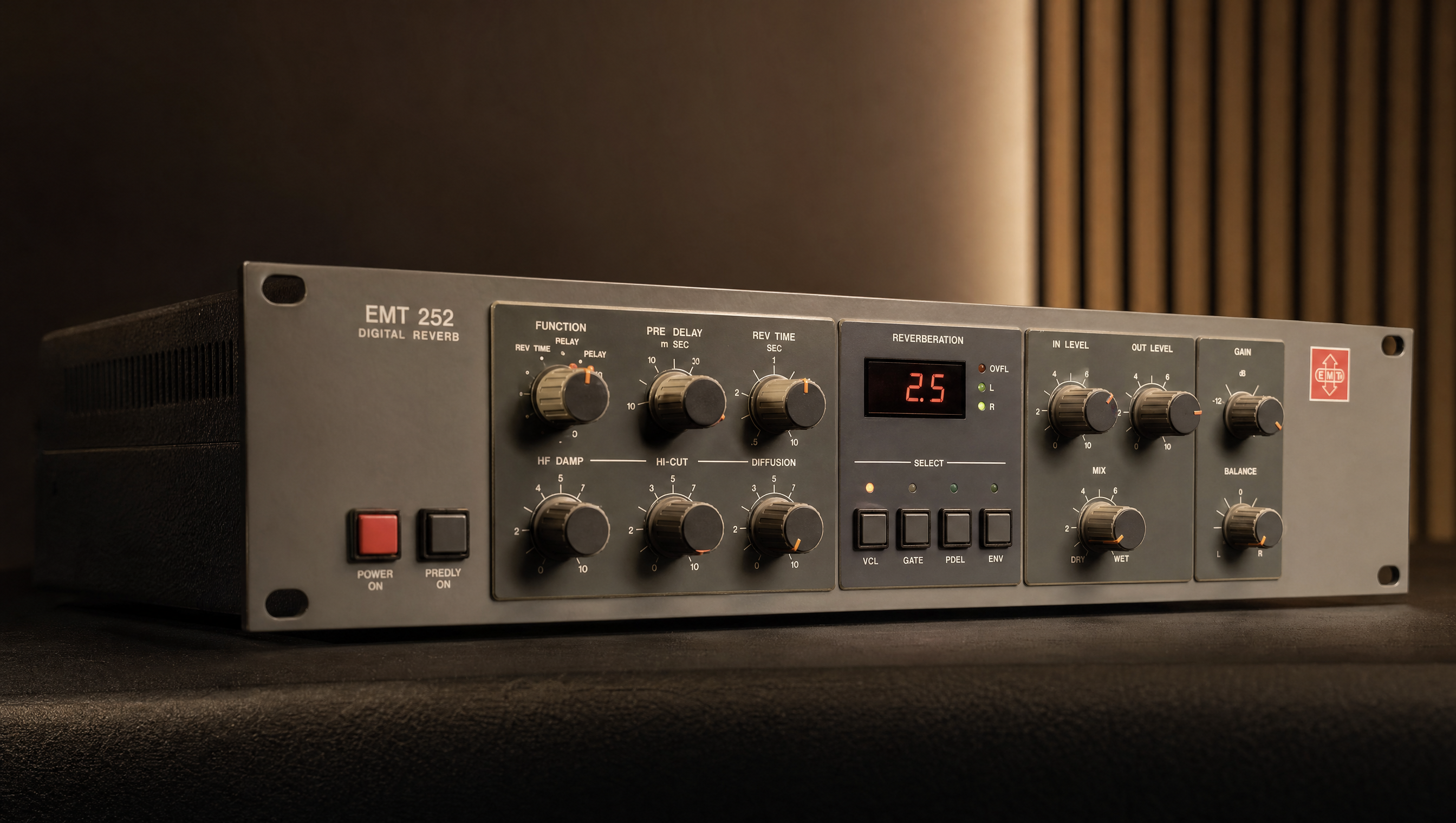
The EMT 252 was released in the early 1980s as the successor to the groundbreaking EMT 250, widely considered the first commercially viable digital reverb. The 250 had been revolutionary, using a custom DSP system to create reverb algorithms that sounded remarkably natural. The 252 built on that foundation with more processing power, more algorithms, and a distinctive front panel design that earned it the nickname "Tinker Bell."
The EMT Legacy
EMT (Elektromesstechnik Wilhelm Franz KG) was a German company best known for the EMT 140 plate reverb. When digital technology arrived in the late 1970s, EMT was one of the first companies to develop a digital reverb. The EMT 250, released in 1976, used a parallel processing architecture with multiple delay lines and allpass filters to create a reverb that was dense, smooth, and free of the metallic artifacts that plagued early digital reverbs.
The 250 and 252 share a family sound. Both are characterized by a dark, thick reverb with a decay that seems to constantly shift and move. This movement comes from the modulation built into the algorithms. The 250 and 252 use modulated delay lines within the reverb network, which prevents the static resonances that make other digital reverbs sound artificial.
Why the 252 Matters
The EMT 252 is less famous than the 250, but it offers more sonic possibilities. Where the 250 had a limited set of algorithms, the 252 expanded the palette with additional programs and parameter ranges. It also included the NON-LIN (nonlinear) mode, which produces gated and reverse reverb effects, and the D-REV mode, which offers a different algorithmic approach to reverb generation.
The frequency-band multipliers are a unique feature of the 252. The hardware allows the user to adjust the reverb time independently for different frequency bands, giving frequency-dependent control over the decay character. We captured these multipliers as separate IRs, giving users the same frequency-dependent control of the reverb as the hardware offers.
The Capture Process
The EMT 252 library consists of 2,112 stereo impulse responses. This is not a number we chose arbitrarily. It represents the practical totality of settings the 252, 250, NON-LIN, and D-REV modes have to offer. Each IR corresponds to a specific combination of algorithm, decay time, frequency multiplier, and parameter setting.
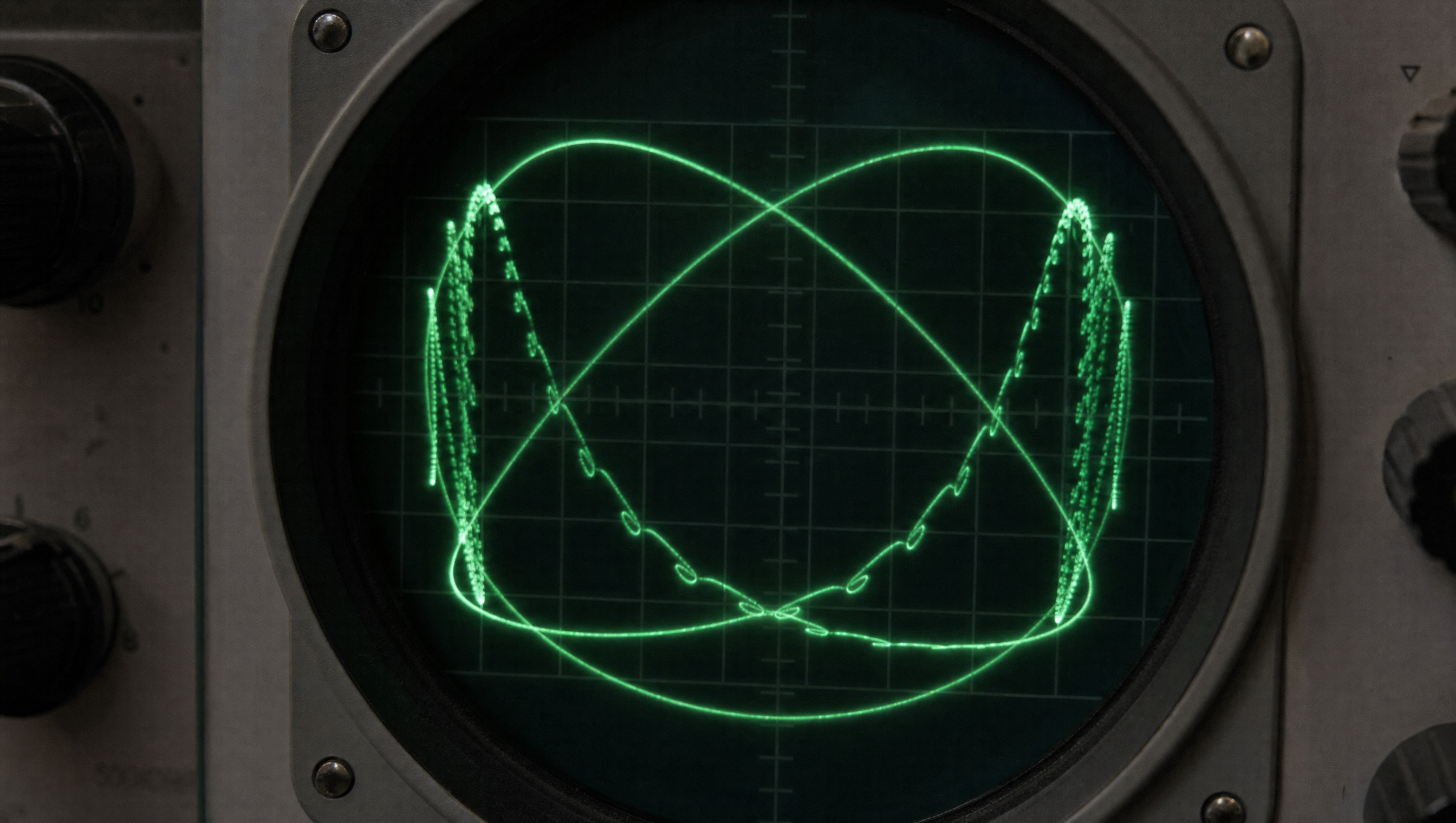
The unit was recorded analog, using the EMT 252's own converters rather than tapping the digital signal directly. This preserves the character of the 252's D/A and A/D stages, which contribute to the unit's distinctive sound. The converters in early digital hardware are not transparent. They add coloration, and that coloration is part of what people are looking for when they seek out vintage digital reverbs.
Modulation and the Chorus Effect
The EMT 252's modulation is a vital part of its sound. The internal delay lines are modulated with low-frequency oscillators, which creates a chorusing effect in the reverb tail. This chorusing is what gives the 252 its lush, moving quality. Without it, the reverb sounds correct but static, like a photograph of a moving subject.
An impulse response captures a static snapshot, so the modulation is not present in the IR itself. To address this, the library includes modulation delay presets for Pro Tools (Short Delay II) and Logic (Chorus plugin) that recreate the chorusing effect. Applying the modulation delay after the convolution reverb restores the movement that makes the 252 sound alive.
One advantage of the IR approach is that you can turn the chorusing off by simply not inserting the modulation delay. The hardware does not offer this option. The modulation is always on. With the IR library, you have a choice that the original hardware does not provide.
The EMT 252's modulation is what makes it sound like a living thing rather than a processor. Capturing the IRs without modulation and then adding it back gives you more control than the hardware itself.
Library Structure
The 2,112 IRs are organized into four groups corresponding to the four modes:
- EMT 252 (Full Library): The complete set of 252 algorithms, including all decay times and frequency multiplier settings. This is the core of the library.
- EMT 250: The 250-mode algorithms, which have a slightly different character from the 252. Darker and denser, with a longer perceived decay.
- NON-LIN: Nonlinear and gated reverb settings. These produce the explosive drum sounds of the 1980s, with reverb that builds quickly and cuts off abruptly.
- D-REV: The alternative reverb algorithm, which uses a different internal architecture to produce a more diffuse, less distinct reverb character.
Each reverberation time consists of multiple impulses, representing the different frequency-band multiplier settings. The impulses have been sorted for easy and fast access, with a naming convention that indicates the mode, algorithm, decay time, and frequency setting.
Compatibility
As with all our libraries, the EMT 252 IRs are compatible with any convolution reverb that reads WAV files. Proprietary preset support is provided for Altiverb, Waves IR1 and IRL, McDSP Revolver, TL-Space, Logic Space Designer, Structure, and Kontakt 2/3.
Pro Tools and Logic users receive modulation delay presets that recreate the chorusing. Users of other DAWs receive screenshots of the Pro Tools Mod Delay II settings, with instructions for recreating the modulation in their choice of DAW and plugin.
A Vanishing Sound
The EMT 252 is over forty years old. The custom DSP chips inside it are no longer manufactured, and failed units are often parted out rather than repaired. Working 252s are becoming scarce, and the ones that remain will not last forever. This library is a preservation project as much as a production tool. It captures the sound of a specific piece of hardware at a specific point in its life, before that sound is lost.