If you have ever read a specification for a concert hall, you have seen RT60. It is the number that tells you how long a room reverberates. A bedroom might have an RT60 of 0.3 seconds. A concert hall might be 2.0 seconds. A cathedral can exceed 8 seconds. The number seems simple, but it hides as much as it reveals.
What RT60 Actually Measures
RT60 is defined as the time it takes for the sound pressure level in a room to decay by 60 decibels after the sound source stops. The measurement is made after the room has reached a steady state of reverberation, meaning the sound has bounced around enough times that the reverberant field is uniform.
The definition comes from Wallace Clement Sabine, a physicist who in the late 1890s conducted systematic experiments on room acoustics (using organ pipes and a stopwatch in the Sanders Theatre at Harvard). Sabine discovered that reverberation time is proportional to the volume of the room and inversely proportional to the amount of absorption. His formula, RT60 = 0.161 V / A, where V is volume in cubic meters and A is total absorption in metric sabins, remains the foundational equation of room acoustics.
Why One Number Is Not Enough
The problem with RT60 is that it treats the decay as a single value. In reality, a room's decay is frequency-dependent. Low frequencies almost always decay more slowly than high frequencies, because most absorbing materials are less effective at bass frequencies. A room might have an RT60 of 1.5 seconds at 1 kHz but 2.5 seconds at 125 Hz.
This is why acoustic specifications often give RT60 as a range or as values at multiple frequencies. A well-designed concert hall might target 2.0 seconds at mid-frequencies (500 Hz to 1 kHz) while allowing longer decay times at low frequencies for warmth and shorter times at high frequencies for clarity.
When you see a single RT60 number, it usually refers to the mid-frequency average. This is useful for comparison but tells you nothing about the room's tonal character. Two rooms with the same mid-frequency RT60 can sound completely different if one has a long bass decay and the other does not.
The Decay Curve
To really understand how a room sounds, you need to look at the decay curve. This is a plot of sound pressure level versus time after the source stops. In an ideal room, the decay is a straight line on a logarithmic scale, meaning the level decreases at a constant rate. In practice, decay curves are rarely straight.
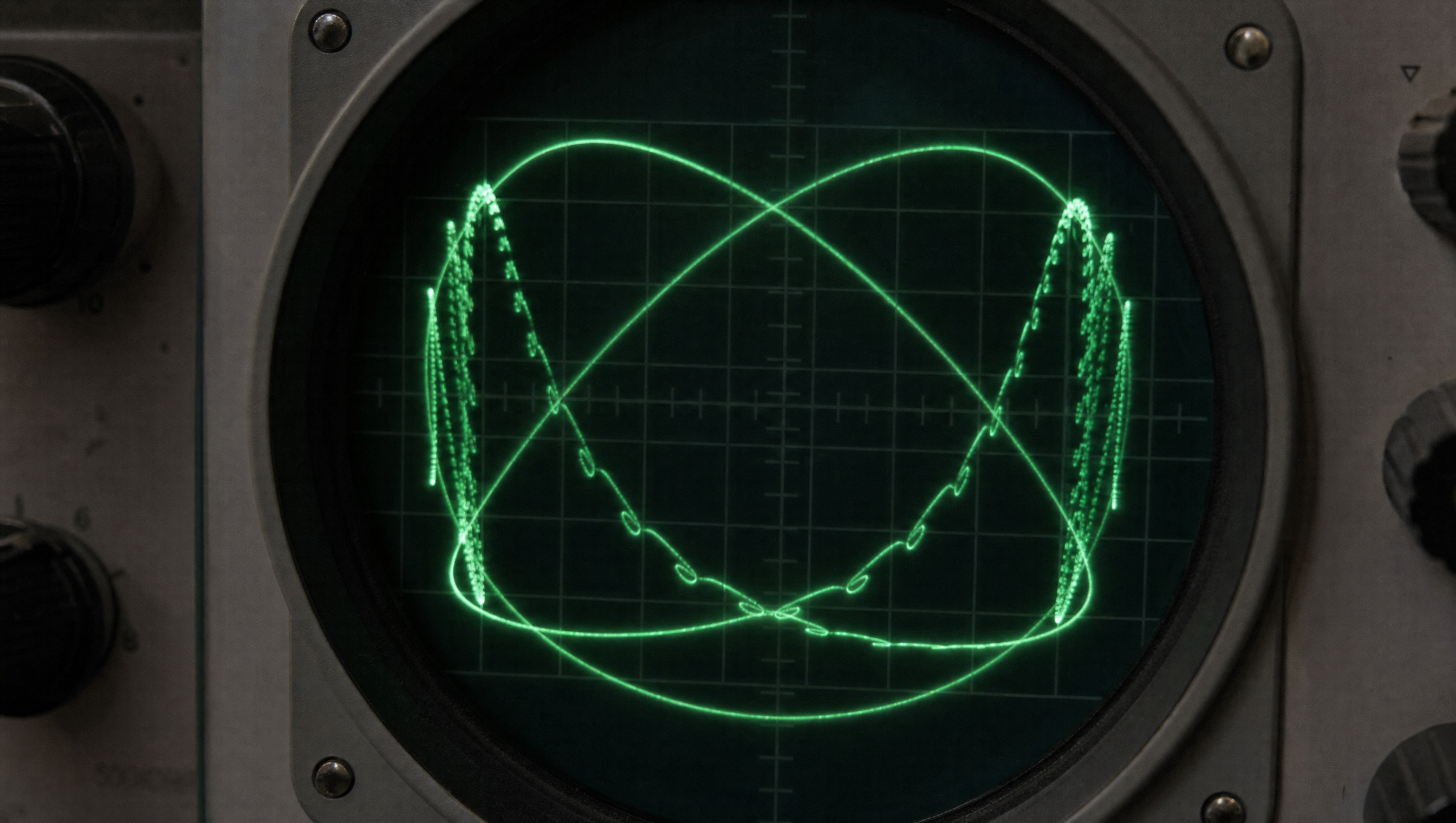
Common deviations from linear decay include:
- Curved decay: The decay rate changes over time. A room with a curved decay might have a fast initial decay followed by a long, quiet tail. This can sound natural and is common in rooms with non-uniform absorption.
- Double-sloped decay: The decay has two distinct rates, typically a fast initial decay followed by a slower tail. This occurs in coupled spaces, such as a room connected to a larger reverberant volume through a doorway. The main room decays quickly, but energy from the coupled space feeds back in, creating a longer tail.
- Sagging decay: The decay rate decreases in the middle of the decay. This can indicate a room mode that is releasing energy slowly at a specific frequency.
Early Decay Time vs RT60
Research has shown that the initial portion of the decay (the first 10 dB, called Early Decay Time or EDT) is more perceptually important than the full RT60. EDT correlates with the perceived liveness or clarity of a room. A room with a short EDT but a long RT60 will sound clear but spacious. A room with a long EDT will sound muddy regardless of the RT60.
This is why two concert halls with the same RT60 can sound different. If one has a short EDT (fast initial decay) and the other has a long EDT, the first will sound clearer and more articulate even though the overall reverb time is the same.
RT60 tells you how long the room reverberates. EDT tells you how the room feels. A great-sounding room gets both right.
How RT60 Affects Music
The ideal RT60 depends on the type of music being performed. Different musical styles have different requirements for clarity and blend:
- Speech and podcasting: 0.3 to 0.6 seconds. Short enough that words remain intelligible.
- Amplified music: 0.6 to 1.0 seconds. Enough space for the music to breathe without muddying the mix.
- Chamber music: 1.0 to 1.5 seconds. Provides blend and warmth without obscuring detail.
- Symphonic music: 1.8 to 2.2 seconds. The traditional target for concert halls. Long enough for the orchestra to blend, short enough for complex passages to remain clear.
- Organ and choral music: 3.0 to 6.0 seconds. The long decay creates the ethereal quality associated with sacred music.
These are guidelines, not rules. The actual ideal depends on the specific music, the performance style, and listener preference. Some modern concert halls have adjustable acoustics (movable panels, variable absorption) that allow the RT60 to be tuned for different programs.
Measuring RT60
Modern RT60 measurement uses the interrupted noise method or the integrated impulse response method. The interrupted noise method involves playing broadband noise into the room, stopping it abruptly, and measuring the decay. The integrated impulse response method uses an impulse response (typically from a sine sweep) and calculates the decay from the reverse-integrated energy curve.
The impulse response method is more accurate because it provides the full decay curve, not just a single number. It also allows separate calculation of EDT, T20 (decay from -5 to -25 dB), and T30 (decay from -5 to -35 dB), which can reveal non-linear decay behavior.
For anyone working with impulse responses in music production, understanding the decay curve is essential. When you load an IR into a convolution reverb, you are loading the room's full decay behavior. The RT60 is just one way of summarizing it. The curve tells you everything.